AI as a New Media: a McLuhan-Inspired Examination

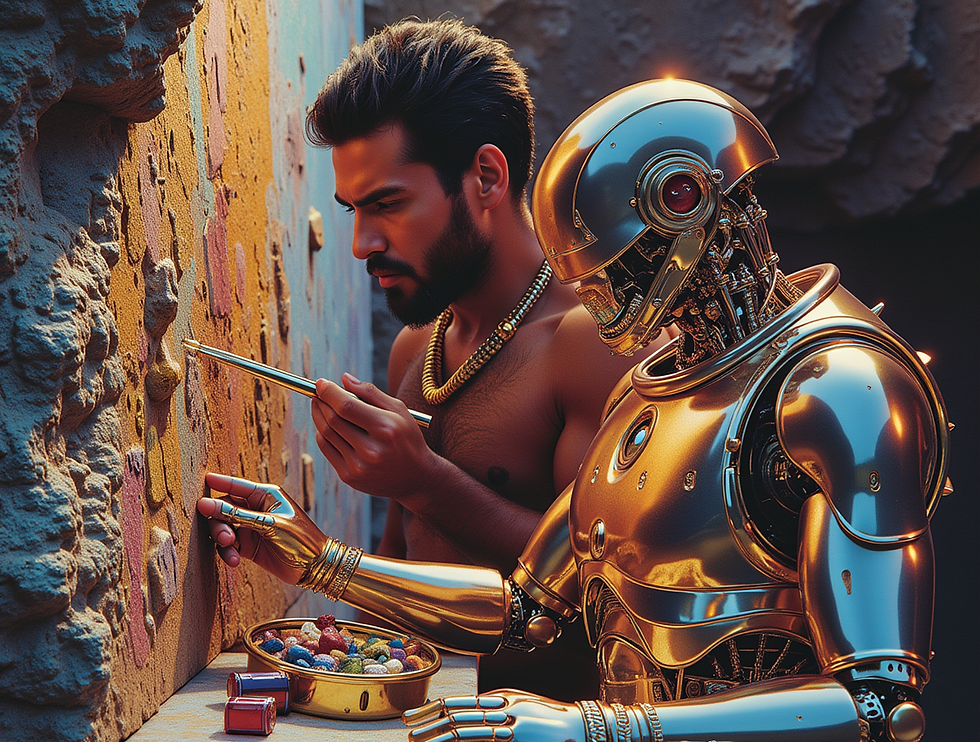
Jeff Gomez--a transmedia hero and visionary if ever there was one--recently shared a compelling idea: “Artificial Intelligence will become its own media platform.” He traced the evolution of storytelling platforms—from the printing press to radio, film, television, video games, mobile devices, and now AI. It’s a thought-provoking concept that brings to mind the theories of Marshall McLuhan.
McLuhan believed that new media follow predictable patterns as they emerge and mature. One of these patterns, which Jeff also touched on, is particularly relevant:
The Content of New Media Mimics the Old
McLuhan observed that the first content of any new medium is borrowed from the one it’s replacing. Early films were essentially recorded stage plays. Early websites looked like digital brochures. It’s a natural step: creators use the familiar to explore the potential of the unfamiliar.
AI fits this pattern perfectly. Today’s generative AI tools simulate existing media forms:
Writing novels and essays that echo the printed book.
Creating images reminiscent of photography and illustration.
Composing music and producing videos that imitate established creative fields.
But What Comes Next?
Over time, new media evolve their own unique language. Film broke free of theater’s constraints with techniques like montage and dynamic framing. Websites developed interactivity and hyperlinking, carving out a space distinct from print media.
The question is: What will AI’s unique “grammar” look like? What narrative forms, creative techniques, or audience experiences will emerge that could only be created by AI?
The most enthusiastic visions of AI as a media platform (including Gomez's) imagine a future of real-time co-creation. Users might collaborate with AI to craft stories that adapt dynamically to their emotions, featuring characters that evolve based on audience interaction. Imagine a narrative that changes course not just based on user choices but on how they’re feeling in the moment.
Excitement—and Unease
While this potential is thrilling, it’s also a bit unnerving. McLuhan’s theories offer another insight that feels particularly relevant: a new medium, when pushed to its extreme, can reverse into the opposite of itself. Could the ultimate evolution of AI storytelling lead to a loss of what makes storytelling meaningful in the first place?
For now, the exploration of AI as a media platform is just beginning. As it evolves, it will be fascinating to see whether—and how—it breaks free from simply mimicking the old to create something entirely new.
And that’s a topic I’ll continue to explore, especially when it comes to McLuhan’s idea of media reversal… but I’ll save that for another day.


Comments